
Regression testing
AI Support Agent Regression Testing
A regression testing guide for support teams that need to rerun risky customer intents after source, policy, or vendor changes.
Support Readiness Lead, Meihaku · May 11, 2026
AI support regression testing means rerunning the customer questions that previously failed after a source, policy, prompt, workflow, or vendor configuration changes.
For support readiness, the important difference is that many regressions are caused by source drift, not model drift.
What this helps decide
Turn AI Support Regression Testing into launch scope.
Use this guide to decide which customer intents are approved for AI, which need restrictions, which need source cleanup, and which should stay human-owned.
Evidence used
Sources, policies, and support artifacts
- Zendesk: Testing an AI agent before publishing it for customers
- Salesforce: Testing Agentforce agents
Review output
Approve, restrict, block, or hand off
- Regression inputs
- Review fields
- Outputs
How this guide was built
2 public references, 3 review areas
- Create the regression set from real failures
- Trigger retests after source changes
- Track launch states, not only pass rates
Create the regression set from real failures
Do not start with synthetic edge cases. Start with failed prompts, wrong answers, escalations that lacked context, and intents that reviewers blocked during pre-launch review.
Each regression test should keep the original customer phrasing and the source evidence that was supposed to support the answer.
- Wrong answers.
- Weak handoffs.
- Policy contradictions.
- Missing source evidence.
Trigger retests after source changes
A help article edit, macro rewrite, SOP change, policy update, pricing change, or vendor configuration change should trigger relevant regression tests.
Without this loop, the AI may pass launch review and fail after the business changes the source material underneath it.
- Product release.
- Pricing update.
- Refund policy change.
- Macro cleanup.
Track launch states, not only pass rates
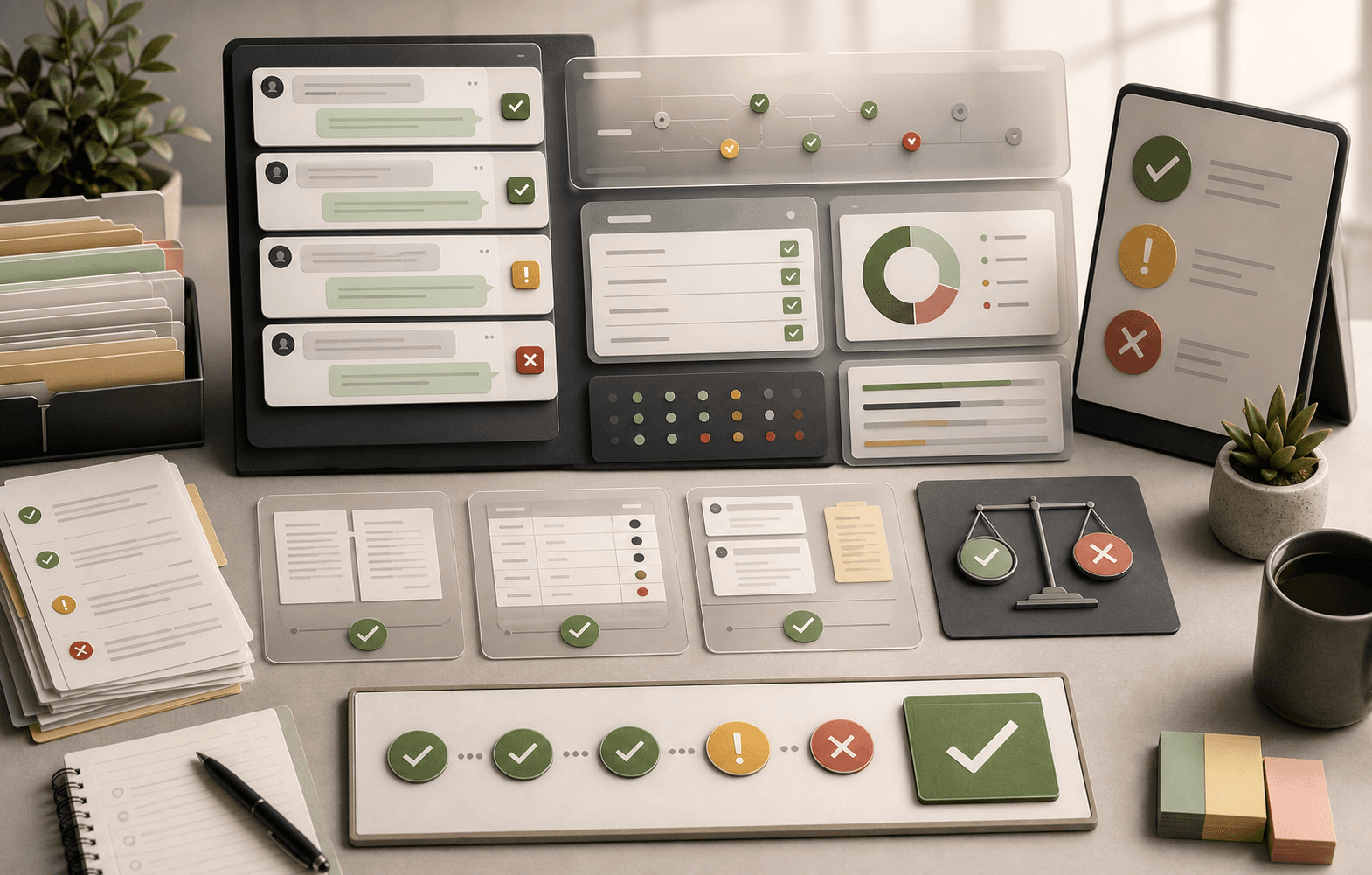
A regression suite should update launch scope. A passing answer may become approved. A failing answer may stay restricted, blocked, source-fix-needed, or human-only.
That makes regression testing useful to support ops, not only engineering.
- Approved after retest.
- Restricted until context is known.
- Blocked until source fix.
- Human-owned by policy.
Checklist
Use this as the working review before launch.
Regression inputs
- Failed prompts
- Source changes
- Policy updates
- Vendor changes
Review fields
- Expected answer
- Source citation
- Reviewer decision
- Retest date
Outputs
- Pass
- Restrict
- Block
- Human-only
How Meihaku helps
Turn the checklist into a launch audit.
Meihaku reads your sources, maps them to customer intents, drafts cited answers, and shows which topics are cleared for AI, blocked, source-fix needed, or human-only.
Related guides
Keep clearing answers before launch.
These pages connect testing, knowledge-base cleanup, and readiness scoring into one pre-launch workflow.
Intercom Fin readiness
Intercom Fin Readiness Audit
Audit your Intercom Fin rollout before customers see it. See which intents are cleared for Fin, which need source cleanup, and which should stay human-only.
Vendor pageZendesk AI readiness
Zendesk AI Readiness Audit
Audit Zendesk Guide, macros, ticket history, and policy documents before Zendesk AI answers customers.
Vendor pageGorgias AI readiness
Gorgias AI Readiness Audit
Audit your Gorgias AI rollout before it handles refund, order, shipping, and product questions.
Vendor pageFreshdesk AI readiness
Freshdesk Freddy AI readiness audit
Use this readiness workflow to check whether Freshdesk solution articles, ticket patterns, Freddy AI Agent knowledge sources, and workflows can safely support AI answers.
Vendor pageSalesforce AI readiness
Salesforce Service Cloud AI readiness audit
Use this readiness workflow to check whether Salesforce Knowledge, Service Cloud cases, Agentforce actions, and support policies are safe for customer-facing AI.
Vendor pageHubSpot Customer Agent readiness
HubSpot Customer Agent readiness audit
Use this readiness workflow to check whether HubSpot content, public URLs, tickets, and Service Hub knowledge are ready to ground Breeze-powered customer agent answers.
Vendor pageAI support readiness template
AI support launch checklist
A vendor-neutral CSV checklist for deciding which customer intents are approved, restricted, blocked, or human-only before an AI support agent goes live.
TemplateAI agent testing template
AI agent testing framework
A vendor-neutral CSV template for testing customer-facing AI agents by intent, source evidence, policy fit, escalation behavior, reviewer workflow, and launch state.
TemplateAI support risk template
AI support risk register
A CSV risk register for support teams deciding which insurance, telehealth, ecommerce, and cross-industry customer intents can safely be automated.
TemplateTesting workflow
Ticket to AI Test Scenarios
A guide for converting real support tickets into pre-launch AI test scenarios with source evidence, expected answer boundaries, and retest steps.
ReadAI agent testing
AI Agent Testing for Customer Support
A support-specific AI agent testing checklist for policy coverage, source citations, stale answers, escalation rules, and launch go/no-go decisions.
ReadAI agent testing tools
AI Agent Testing Tools
A buyer-focused guide to choosing AI agent testing tools for customer support teams, from agent QA and simulations to source-readiness review.
ReadAI support risk register
AI Support Risk Register
A support-specific guide to using a risk register before AI agents answer insurance, telehealth, ecommerce, and other sensitive customer questions.
ReadSample report
AI Support Readiness Sample Report
A sample report page for Meihaku: concrete support risk categories, launch states, source fixes, owners, and retest steps.
ReadFAQ
Common questions
When should support teams rerun AI regression tests?
Rerun them after source edits, policy changes, product releases, vendor configuration changes, and wrong-answer incidents.
Is regression testing only for engineering teams?
No. Support teams need regression tests because policy, macro, and help-center changes can reintroduce customer-facing AI failures.
What is the output of support regression testing?
The output should be an updated launch state for each intent: approved, restricted, blocked, source-fix-needed, or human-only.
Sources
Vendor documentation and public references that ground the claims in this guide.