
Hamming alternatives
Hamming AI Alternatives for Support Teams
An honest alternatives page for support teams that like Hamming's testing depth but need to decide whether source readiness, outcome evaluation, adversarial audit, or support QA is the better first layer.
Support Readiness Lead, Meihaku · May 11, 2026
Hamming is a serious reference point for AI agent testing because it explains testing as an operating system: resources, glossary, docs, integrations, case studies, and pre-launch confidence.
Support teams should not ask only whether a tool is an alternative to Hamming. They should ask which testing layer they need first. If the problem is runtime behavior, simulation may be right. If the problem is source quality, policy contradiction, or launch scope, Meihaku is the earlier layer.
This page compares the job, the proof, the output, and the reason a support team would choose each path.
What this helps decide
Turn Hamming AI Alternatives into launch scope.
Use this guide to decide which customer intents are approved for AI, which need restrictions, which need source cleanup, and which should stay human-owned.
Evidence used
Sources, policies, and support artifacts
- Hamming AI
- Hamming AI resources
- Cekura blog
Review output
Approve, restrict, block, or hand off
- Before choosing an alternative
- Comparison questions
- When to combine tools
How this guide was built
5 public references, 5 review areas
- Choose Hamming when simulation is the main job
- Choose Meihaku when source readiness is the blocker
- Choose Cekura when voice and chat QA integrations matter
Choose Hamming when simulation is the main job
Hamming testing is useful when the runtime agent already has a defined source boundary and the team needs to test behavior at scale. That includes scenario coverage, regression testing, production monitoring, and consistency checks.
For support teams, the open question is whether the source boundary is actually ready. If the help center conflicts with macros, recent tickets disagree with policy, or no reviewer has approved the answer, simulation may only reveal a source problem the team could have fixed earlier.
- Good for runtime agent behavior testing.
- Good for teams with enough traffic or scenarios to replay.
- Less direct when the support knowledge itself is not launch-ready.
Choose Meihaku when source readiness is the blocker
Meihaku is not trying to be a voice-agent simulator. It checks the support evidence that an AI agent will depend on: help articles, macros, SOPs, policies, ticket history, reviewer notes, and approved answer scope.
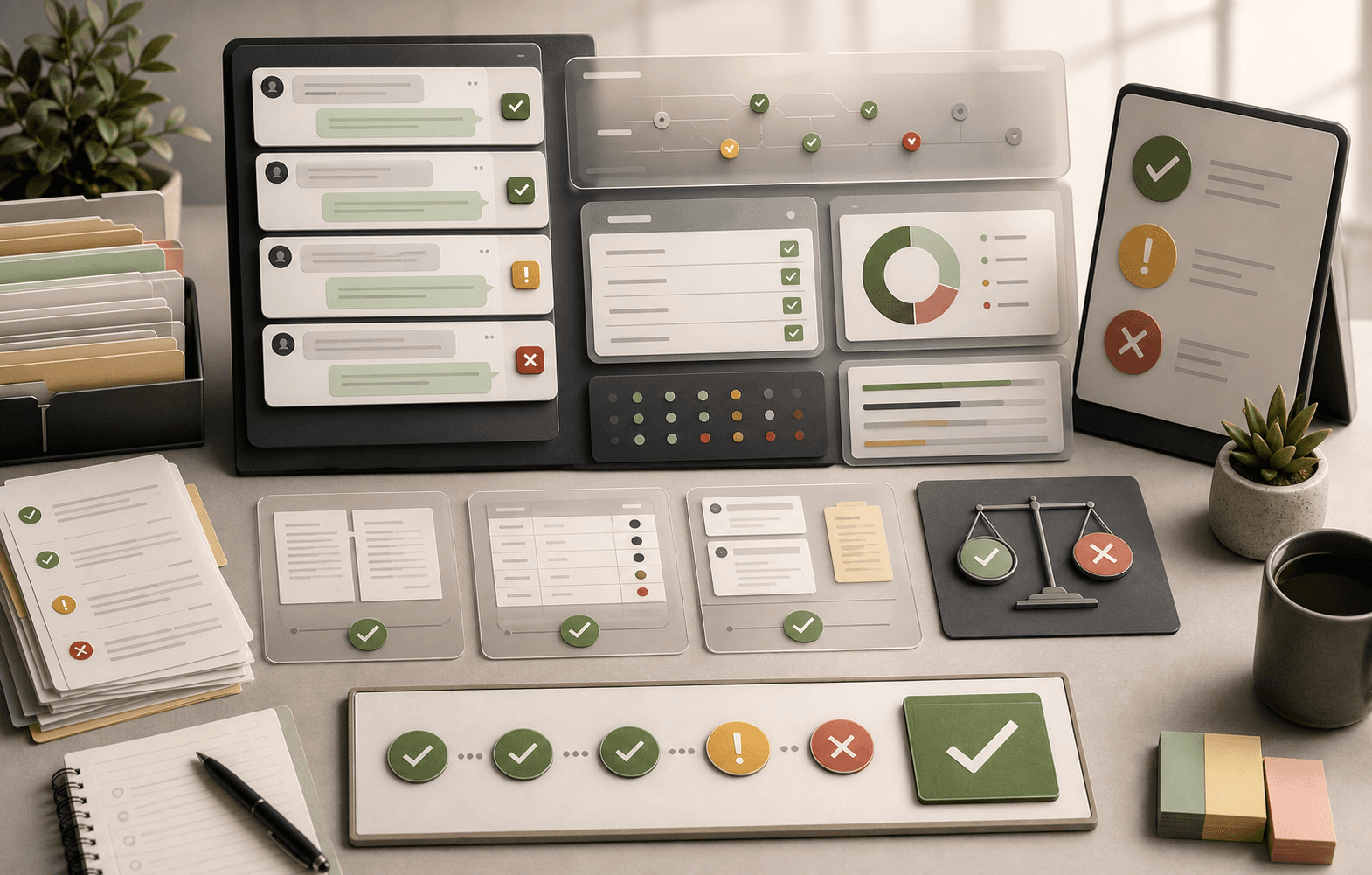
The output is a launch boundary, not a runtime score. Each customer intent becomes approved, restricted, blocked, source-fix-needed, or human-only.
- Good for teams preparing docs before launch.
- Good for support ops, CX, compliance, and product review.
- Useful before simulation or vendor-native testing.
Choose Cekura when voice and chat QA integrations matter
Cekura's public content engine shows a strong QA and integration orientation: blog posts, docs, case studies, partner pages, and comparisons.
If the buying problem is testing voice and chat agents across existing agent platforms, Cekura may be closer to the runtime QA job. If the problem is whether support sources are safe enough for any agent to answer, Meihaku sits earlier.
- Good for QA workflows around AI agent platforms.
- Good for teams that need docs and partner integration depth.
- Still needs source readiness if policies and docs conflict.
Choose Tovix when production outcomes are the question
Tovix evaluation is strongest when the team wants to know whether real conversations completed the customer goal. That is a different layer from source cleanup.
Meihaku uses the diagnostic pattern before broad launch: customer goal, AI answer, root cause, recommended fix, and retest. The root cause is often missing or conflicting source evidence.
- Good for task success, containment, escalation, and regression.
- Good after there are real conversations to evaluate.
- Less direct for teams still preparing their knowledge base.
Choose LLOLA when a support-bot audit is enough
LLOLA is a focused audit offer. It names support-specific risks and sells a report rather than a broad platform.
That is useful when the team wants an adversarial review of a live or near-live bot. Meihaku turns report findings into source fixes, owners, retests, and launch states.
- Good for refund leakage, policy contradictions, unsafe advice, and edge cases.
- Good when the team wants a concrete audit deliverable.
- Less complete if the team needs ongoing source governance.
Checklist
Use this as the working review before launch.
Before choosing an alternative
- Decide whether your bottleneck is source readiness, runtime behavior, outcome scoring, or adversarial risk.
- List the support platforms, docs, macros, SOPs, and policies the AI will rely on.
- Identify whether you need a self-serve tool, audit report, or ongoing monitoring workflow.
- Define who will approve, restrict, or block customer intents.
Comparison questions
- Does the tool show the source evidence behind every answer?
- Does it separate policy conflict from model failure?
- Does it produce a launch decision or only a score?
- Does it fit the support team's review workflow?
When to combine tools
- Use Meihaku before simulation when sources are messy.
- Use Hamming or Cekura after launch scope is defined.
- Use Tovix when production outcomes need regression tracking.
- Use adversarial support-bot audits when support risk is the urgent question.
How Meihaku helps
Turn the checklist into a launch audit.
Meihaku reads your sources, maps them to customer intents, drafts cited answers, and shows which topics are cleared for AI, blocked, source-fix needed, or human-only.
Related guides
Keep clearing answers before launch.
These pages connect testing, knowledge-base cleanup, and readiness scoring into one pre-launch workflow.
Intercom Fin readiness
Intercom Fin Readiness Audit
Audit your Intercom Fin rollout before customers see it. See which intents are cleared for Fin, which need source cleanup, and which should stay human-only.
Vendor pageZendesk AI readiness
Zendesk AI Readiness Audit
Audit Zendesk Guide, macros, ticket history, and policy documents before Zendesk AI answers customers.
Vendor pageGorgias AI readiness
Gorgias AI Readiness Audit
Audit your Gorgias AI rollout before it handles refund, order, shipping, and product questions.
Vendor pageFreshdesk AI readiness
Freshdesk Freddy AI readiness audit
Use this readiness workflow to check whether Freshdesk solution articles, ticket patterns, Freddy AI Agent knowledge sources, and workflows can safely support AI answers.
Vendor pageSalesforce AI readiness
Salesforce Service Cloud AI readiness audit
Use this readiness workflow to check whether Salesforce Knowledge, Service Cloud cases, Agentforce actions, and support policies are safe for customer-facing AI.
Vendor pageAI agent testing template
AI agent testing framework
A vendor-neutral CSV template for testing customer-facing AI agents by intent, source evidence, policy fit, escalation behavior, reviewer workflow, and launch state.
TemplateAI support readiness template
AI support launch checklist
A vendor-neutral CSV checklist for deciding which customer intents are approved, restricted, blocked, or human-only before an AI support agent goes live.
TemplateAI support risk template
AI support risk register
A CSV risk register for support teams deciding which insurance, telehealth, ecommerce, and cross-industry customer intents can safely be automated.
TemplateAI support testing tools
Best AI Support Bot Testing Platforms
A shortlist for support teams comparing AI bot testing platforms by the job they solve: runtime simulation, outcome evaluation, adversarial audit, QA, or source readiness.
ReadAI agent testing tools
AI Agent Testing Tools
A buyer-focused guide to choosing AI agent testing tools for customer support teams, from agent QA and simulations to source-readiness review.
ReadAI agent testing
AI Agent Testing for Customer Support
A support-specific AI agent testing checklist for policy coverage, source citations, stale answers, escalation rules, and launch go/no-go decisions.
ReadSample report
AI Support Readiness Sample Report
A sample report page for Meihaku: concrete support risk categories, launch states, source fixes, owners, and retest steps.
ReadCustomer service QA
Customer Service QA for AI Support
A practical guide for turning customer service QA into an AI support quality program that reviews source evidence, policy safety, escalation, and re-contact risk.
ReadFAQ
Common questions
Is Meihaku a Hamming AI alternative?
It is an alternative only if the buyer's first problem is support-source readiness. If the buyer needs runtime simulation, Hamming may still be useful after Meihaku defines the approved answer boundary.
Why compare Hamming to a document-readiness tool?
Because many support teams have the same launch question: prove the AI is safe before customers see it. Hamming answers that with simulation and testing; Meihaku answers it by preparing and approving the support knowledge boundary.
What should a support team do before buying an AI testing platform?
Map the launch intents, source evidence, high-risk policies, handoff rules, and reviewer owners. If those are unresolved, runtime testing will surface the same source gaps later.
Can Meihaku work alongside Hamming?
Yes. Use Meihaku to approve the source boundary, then use runtime testing to check how the agent behaves inside that boundary.
Sources
Vendor documentation and public references that ground the claims in this guide.